- Finding Utopia Newsletter
- Posts
- Fernando Amorsolo — Painter of Light, Land & Filipino Heart
Fernando Amorsolo — Painter of Light, Land & Filipino Heart
Stories: Fernando Amorsolo — Painter of Light, Land & Filipino Heart; Ninong & Ninang — Beyond Godparents, Anchors of Filipino Life

KGM Resorts
December 16, 2025
Hello and Mabuhay!
Welcome to Finding Utopia — your trusted guide to exploring the wonders of the Philippines and beyond.
In this edition, we bring you inspiring stories and essential travel insights to fuel your next adventure:
Fernando Amorsolo — Painter of Light, Land & Filipino Heart
Ninong & Ninang — Beyond Godparents, Anchors of Filipino Life
Wherever you're dreaming of going next, we're here to guide you closer to your utopia.
Enjoy the read!
— The Finding Utopia Team
Fernando Amorsolo — Painter of Light, Land & Filipino Heart

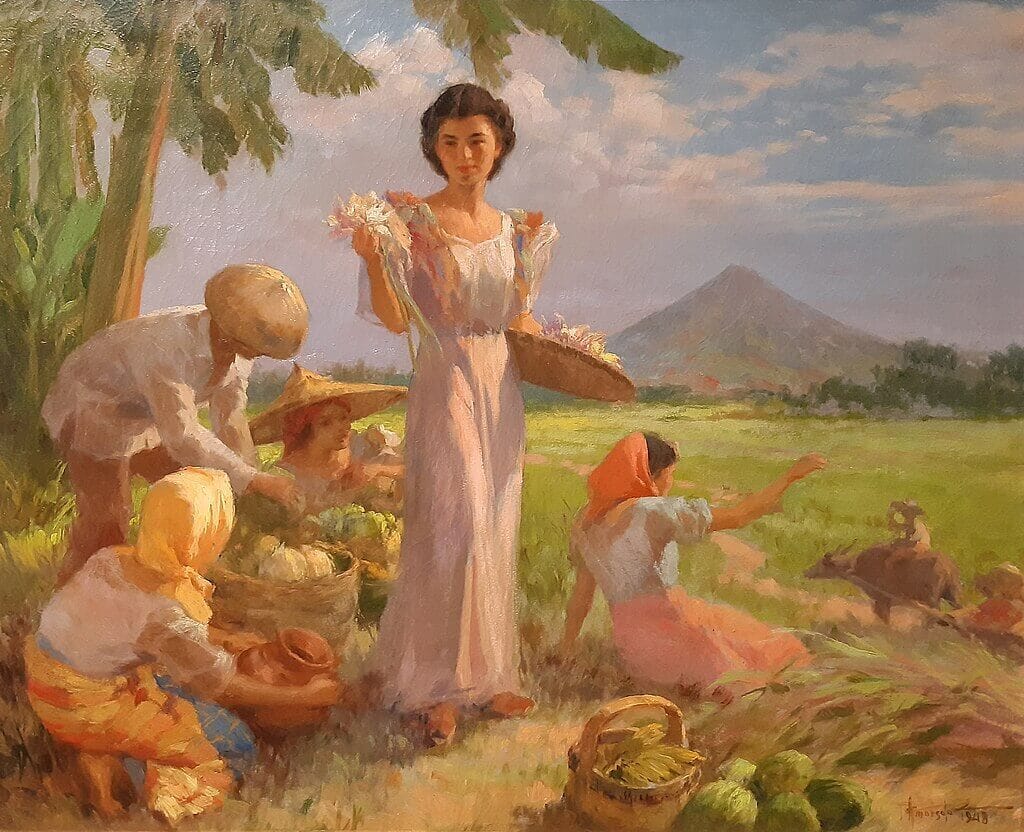
In the golden haze of sunlit rice fields or the soft glow of early morning light on a nipa hut roof, there is a distinct sense of place that marks the work of Fernando Amorsolo — a painter whose brush captured the soul of the Philippines. More than beautiful landscapes, his art reflects memory, identity, and enduring cultural rhythms. In our latest blog post, we explore the life, legacy, and lasting influence of this master artist whose vision helped define a nation’s aesthetic.
Early Life & the Rise of a National Painter
Born in 1892 in the town of Paco, Manila, Fernando Amorsolo grew up during a time of momentous change — the twilight of Spanish colonial rule and the dawn of American influence. From an early age, his talent was clear; he pursued formal studies at the School of Fine Arts of the University of the Philippines, where his gift for light, colour and composition began to crystallize.
Amorsolo’s artistic journey unfolded amid the evolving story of the nation. Rather than focus on political turmoil or abstract sensibilities, he turned his eye to everyday Filipino life — the fields, the markets, the women at work, and the lull of sunsets over rural landscapes. His canvas became a repository of warmth, beauty and cultural belonging.
The Art of Light & Warmth
One of Amorsolo’s defining skills was his luminous treatment of light. Whether painting a hillside vista, a group of carabao in a rice paddy, or a woman carrying baskets at dawn, his work glows with radiance. Light wasn’t merely an element of composition — it was emotion itself.
Sun-drenched landscapes — Fields, hills, and tropical fauna bathed in warm hues.
Scenes of ordinary life — Harvesters, domestic moments, town celebrations.
Tender human presence — Faces and figures rendered with both simplicity and dignity.
In his hands, light became a narrative force — telling stories of hope, resilience, beauty and everyday grace.
Cultural Influence & Legacy
Amorsolo’s works transcended galleries, reaching ordinary Filipinos and international audiences alike. His paintings shaped how many saw the Philippines: vibrant, warm, alive. He became known as the “Painter of Philippine Light,” and in 1972, he was conferred the title National Artist of the Philippines for Painting — a testament to his impact on Filipino artistic identity.
Yet his legacy goes beyond awards. His art influenced generations of visual artists, illustrators, art students, and anyone who sees beauty in the familiar — the rustle of palm fronds, a basket on a humble doorstep, the glint of sunshine on rippling water.
Why Amorsolo Matters to You
For travelers and culture lovers, Amorsolo’s art becomes a lens through which to see the Philippines — not as postcard perfection but as lived experience: land shaped by human hands, communities bound by tradition, light that turns ordinary moments unforgettable.
Viewing his paintings — whether in museums, books, or collections — invites a deeper appreciation of place and spirit: a country carried in colour, shade, and luminous light.
Amorsolo didn’t just paint landscapes — he painted a nation’s soul.

Ninong & Ninang — Beyond Godparents, Anchors of Filipino Life

In Filipino families, certain roles transcend ordinary titles — they become living expressions of love, responsibility, and lifelong connection. Among these, the roles of ninong and ninang hold a special place. Often translated simply as “godfather” and “godmother,” these titles mean far more than ceremonial duty. They are woven into family life, community identity, and the emotional architecture of generations. Our latest blog post explores how these roles came to be, what they represent, and why they remain deeply cherished in Filipino culture.
Origins in Faith & Community
The tradition of naming ninong and ninang in the Philippines traces back to Spanish colonial influence and the spread of Catholicism. As baptism and confirmation rites became central to religious life, so did the formal designation of godparents — adults chosen to spiritually support a child. Over time, the role expanded beyond spiritual guardianship into wider social and familial networks.
In Filipino society, this means that being chosen as a godparent isn’t just a religious formality — it is a deeply personal honour, an enduring commitment, and a public statement of trust between families.
Heart & Responsibility: What Ninong and Ninang Do
At its core, the role of ninong and ninang blends spiritual care, mentorship, and companionship:
Spiritual guidance — From baptism onward, they are expected to support a child’s faith journey — offering prayers, guidance, and presence in milestones.
Moral support — Ninongs and ninangs often serve as trusted adults in a child’s life — advisors, confidants, and role models.
Ceremonial roles — At baptisms, confirmations, and birthdays, they are present not merely as guests but as participants with responsibility.
Special bonds — They give gifts not just on special occasions but as a sign of ongoing connection and affection.
Unlike in some cultures where godparents are distant figures, Filipino ninong and ninang are expected to be actively involved — present in celebrations, ready to step in with care when family milestones are reached or challenges arise.
More Than Tradition: A Lifelong Connection
What sets this role apart in Filipino culture is not obligation but intentional relationship. Being ninong or ninang often transforms into:
A lifetime friendship — A connection that continues through school, work, partnerships, and parenthood.
Support in life’s passages — From first steps to graduation, weddings to baptisms of the next generation.
Mutual respect across ages — Ninongs and ninangs are addressed with courtesy titles like “Tito” and “Tita,” reinforcing respect along with affection.
This network of extended relationships enhances community cohesion, reinforces shared values, and builds social capital — uniting families beyond blood ties into circles of care and loyalty.
Why This Matters to You
Understanding the role of ninong and ninang opens a window into Filipino notions of family, obligation, and love — where social ties matter as much as genetics, and commitment is shown not just in words but in presence and support.
For travelers, this insight deepens cultural empathy. For Filipino diaspora, it resonates with identity and personal memory. For anyone curious about the rhythms of Filipino life, it illuminates how relationships shape both everyday living and life’s most meaningful moments.
Ninong and ninang are more than titles — they are living threads in the tapestry of Filipino community and heart.


Run ads IRL with AdQuick

With AdQuick, you can now easily plan, deploy and measure campaigns just as easily as digital ads, making them a no-brainer to add to your team’s toolbox.
You can learn more at www.AdQuick.com
Reply