- Finding Utopia Newsletter
- Posts
- How Filipinos Celebrate New Year — Rituals, Symbols & Shared Hope
How Filipinos Celebrate New Year — Rituals, Symbols & Shared Hope
Stories: How Filipinos Celebrate New Year — Rituals, Symbols & Shared Hope; Albay — Where Volcano Majesty Meets Coastal Life & Culture

KGM Resorts
January 02, 2026
Hello and Mabuhay!
Welcome to Finding Utopia — your trusted guide to exploring the wonders of the Philippines and beyond.
In this edition, we bring you inspiring stories and essential travel insights to fuel your next adventure:
How Filipinos Celebrate New Year — Rituals, Symbols & Shared Hope
Albay — Where Volcano Majesty Meets Coastal Life & Culture
Wherever you're dreaming of going next, we're here to guide you closer to your utopia.
Enjoy the read!
— The Finding Utopia Team
How Filipinos Celebrate New Year — Rituals, Symbols & Shared Hope
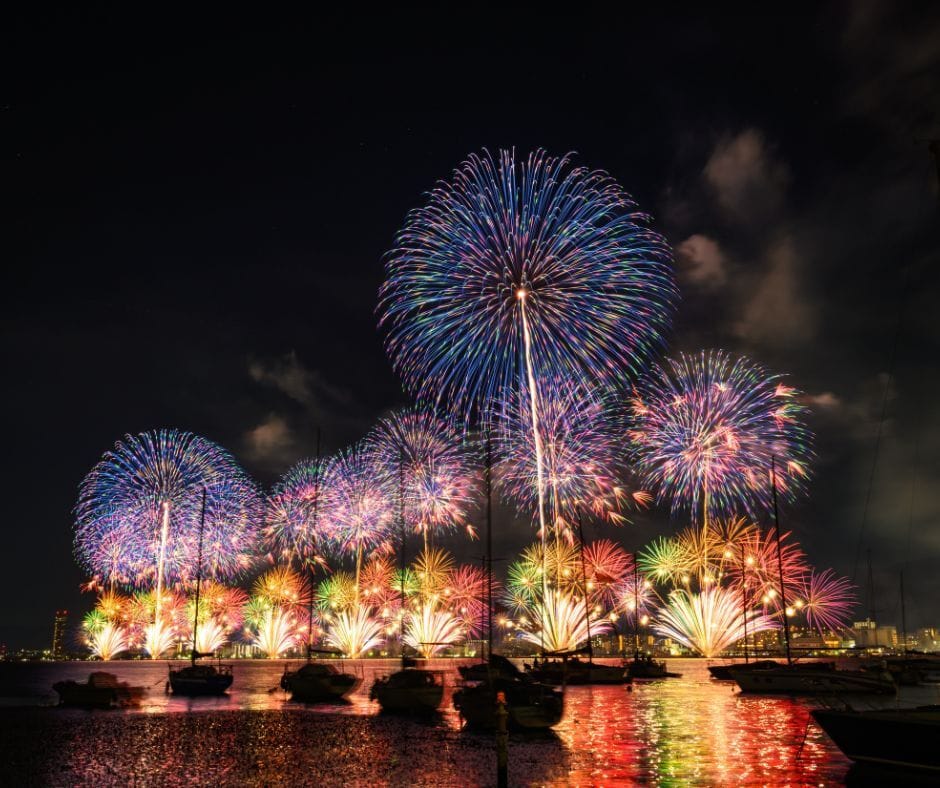
As the calendar winds down and the clock approaches midnight, the Philippines comes alive with a vibrant chorus of sound, colour, and joy. New Year’s Eve here isn’t just another transition — it’s a cultural moment steeped in centuries of belief, family tradition, and expressive celebration. From round fruits on the table to firecrackers lighting up the sky, each Filipino custom carries layered meaning: abundance, protection, renewal, and the powerful human desire for good fortune. Our latest blog post explores these traditions and reveals how they reflect the Filipino heart.
Circles, Coins & Food — Symbols of Prosperity
One of the most unmistakable New Year motifs in Filipino homes is the round shape — the circle as symbol of wealth, completeness, and continuity:
12 Round Fruits on the Table — Families display a basket of 12 different round fruits, representing each month of the year and inviting abundance, prosperity, and good luck.
Coins in Pockets — At midnight, Filipinos often place coins in their pockets or shake money in their hands, welcoming monetary fortune in the year ahead.
Round Items & Lucky Shapes — From round food platters to circular decorations, Filipinos embrace shapes that recall cycles, abundance, and closed loops of good energy.
These symbols aren’t superstitious — they’re cultural expressions of optimism, communal hope, and a belief in continuity across time and generations.
Noise, Lights & Presence — A Ritual of Dispelling Negativity
As the clock approaches midnight, another tradition heats up: noisemaking.
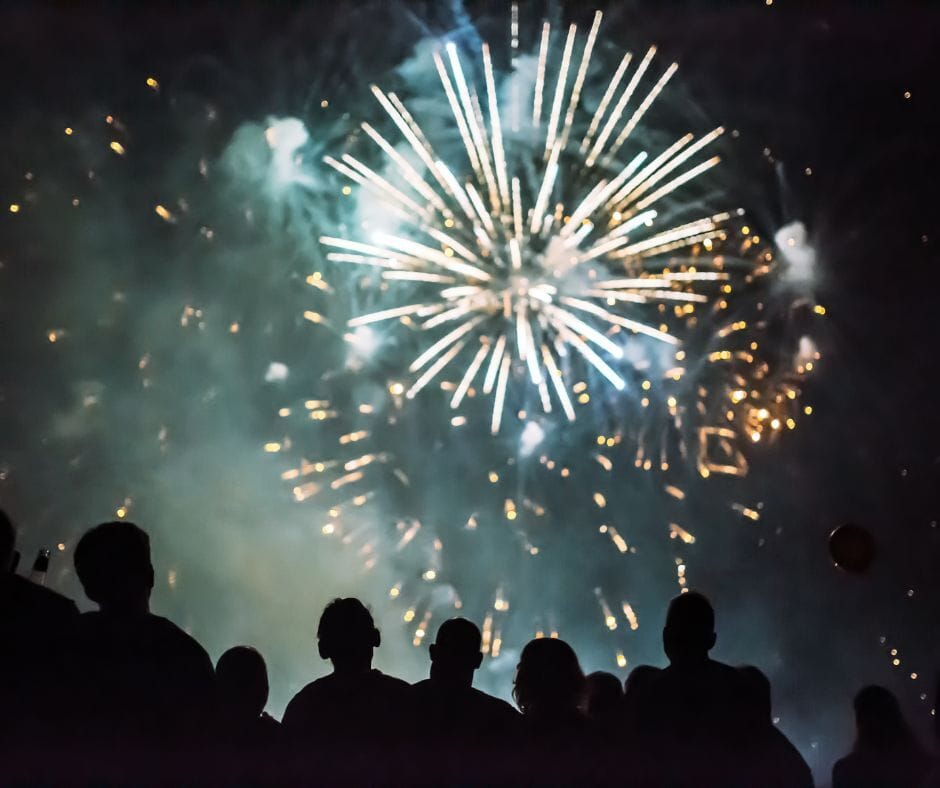
Firecrackers & Loud Sounds — Bang! Boom! Crack! Filippinos light firecrackers or make loud noise to “drive away evil spirits” and welcome fresh energy. In many villages, each pop echoes both playfulness and spiritual symbolism — believed to protect, clear away trouble, and make room for blessings.
Music & Singing — Homes and barangays fill with vibrant music, laughter, and song — a way to celebrate not just the year ahead, but the gift of shared life, food, and presence.
In the Filipino worldview, noise isn’t chaos. It’s protective ritual, communal expression, and collective exhale as one-year closes and another begins.
Family, Food & Togetherness — The Heart of Midnight
For Filipinos, New Year’s celebration isn’t complete without family. Tables are set with festive dishes — lechon, pancit, sticky rice, desserts, fruit — and relatives gather from far-flung places to share the last meal of the year.
Pancit for Long Life — Long noodles represent longevity — another layer of symbolism woven into food.
Sharing Blessings — To elders, young ones often offer greeting with traditional courtesies (mano), expressing respect and wishing good health and fortune.
These moments are less about pomp and more about connection — in a culture that values togetherness, shared meals aren’t just fuel, they’re affirmation.
Kindness, Purity & New Beginnings
Another tradition comes from shared belief: some Filipinos clean their homes thoroughly before New Year’s Eve — sweeping away dust, washing floors, opening windows — symbolic cleansing of the old to make space for the new. Others avoid bitter foods at midnight, seeking sweetness and ease instead.
These practices aren’t rigid rules. They are living expressions of hope, ritual, and cultural imagination — ways of entering the future with intention and heart.
A Celebration of Belief, Family & Hope
Filipino New Year’s Eve is more than fireworks and countdowns. It reflects deep cultural values: family unity, spiritual hope, communal joy, and the belief that what we do together echoes into tomorrow. In noise and quiet moments alike, this celebration serves as both release and welcome — a shared breath between yesterday and tomorrow.

Albay — Where Volcano Majesty Meets Coastal Life & Culture

In the heart of the Bicol Region, the province of Albay rises like a storybook landscape — crowned by the perfect cone of Mayon Volcano, edged by sweeping coastlines, and woven with vibrant culture that reflects both resilience and warmth. Here, dramatic natural beauty and human heritage come together in ways that define the Filipino spirit: bold, awe-inspiring, and deeply rooted in place. In our latest blog post, we explore how volcano, sea, history, and community meet in Albay — creating a destination as rich in meaning as it is in scenery.
Mayon Volcano — Nature’s Unsurpassed Masterpiece
Mayon Volcano is more than a landmark — it is an icon. Renowned for its nearly perfect cone, this active volcano draws visitors from far and wide, not just for its beauty, but for what it symbolizes: power and poise in balance.
Symmetry & Scale — Its flawless form rises from the plains, drawing eyes and cameras alike.
Living Landscape — Mayon’s slopes and lava-formed ravines are a reminder that the land here is always in motion — alive with geological energy.
For travelers, seeing Mayon isn’t a side note — it’s a defining moment. Whether viewed from Cagsawa Ruins Park at sunrise or from lakeside reflections at Sumlang Lake, the volcano connects you to the land’s living history — shaped by fire, time, and rainfall.
Coastal Beauty & Water-Bound Adventures
Albay’s shoreline stretches beyond imagination, with waves that vary from gentle bays to surf-ready breaks. The province embraces the water in many forms:
Dramatic Cliffs & Black Sand Beaches — Geological variance creates breathtaking coastal panoramas.
Hidden Inlets & Quiet Bays — Perfect for contemplative walks, picnics, or sunset watching.
Surf at San Rafael & Other Breaks — For those chasing swells, Bicol’s beaches offer rewarding rides.
The water isn’t just scenery; it’s a way of life — supporting fishermen, surfers, swimmers, and wanderers who choose their pace, wave or calm, with ease.
Cultural Roots & Local Heritage
Albay’s culture reflects its history and resilience:
Cuisine — Bicolano dishes like laing and Bicol express carry bold flavors of coconut, chili, and local produce; they speak of land, sea, heat, and harvest.
Festivals — Events like the Ibalong Festival celebrate mythic heroes and community pride — blending storytelling and performance into public pageantry.
Heritage Sites — From centuries-old churches to markets and barrios, traditions live alongside modern life.
Here, culture is not preserved behind glass — it thrives in kitchens, plazas, fiestas and daily greetings.
Why Albay Matters to You
Albay is a place where nature and culture don’t just coexist — they inform each other. It’s where a volcano shapes the soil and the soul; where coastal tides carry community livelihood; where flavor, story, land and horizon meet.
For travelers who seek more than a postcard view — who want meaning with their memories — Albay delivers.
Albay invites you to stand before Mayon, wander shores at dawn, taste bold local flavors, and enter a landscape rich in presence and story.


Reply