- Finding Utopia Newsletter
- Posts
- Rattan Crafts of the Philippines — Weaving Nature into Filipino Heritage
Rattan Crafts of the Philippines — Weaving Nature into Filipino Heritage
Stories: Rattan Crafts of the Philippines — Weaving Nature into Filipino Heritage

KGM Resorts
August 29, 2026

In partnership with

Hello and Mabuhay!
Welcome to Finding Utopia — your trusted guide to exploring the wonders of the Philippines and beyond.
In this edition, we bring you inspiring stories and essential travel insights to fuel your next adventure:
Rattan Crafts of the Philippines — Weaving Nature into Filipino Heritage
Wherever you're dreaming of going next, we're here to guide you closer to your utopia.
Enjoy the read!
— The Finding Utopia Team
Rattan Crafts of the Philippines — Weaving Nature into Filipino Heritage

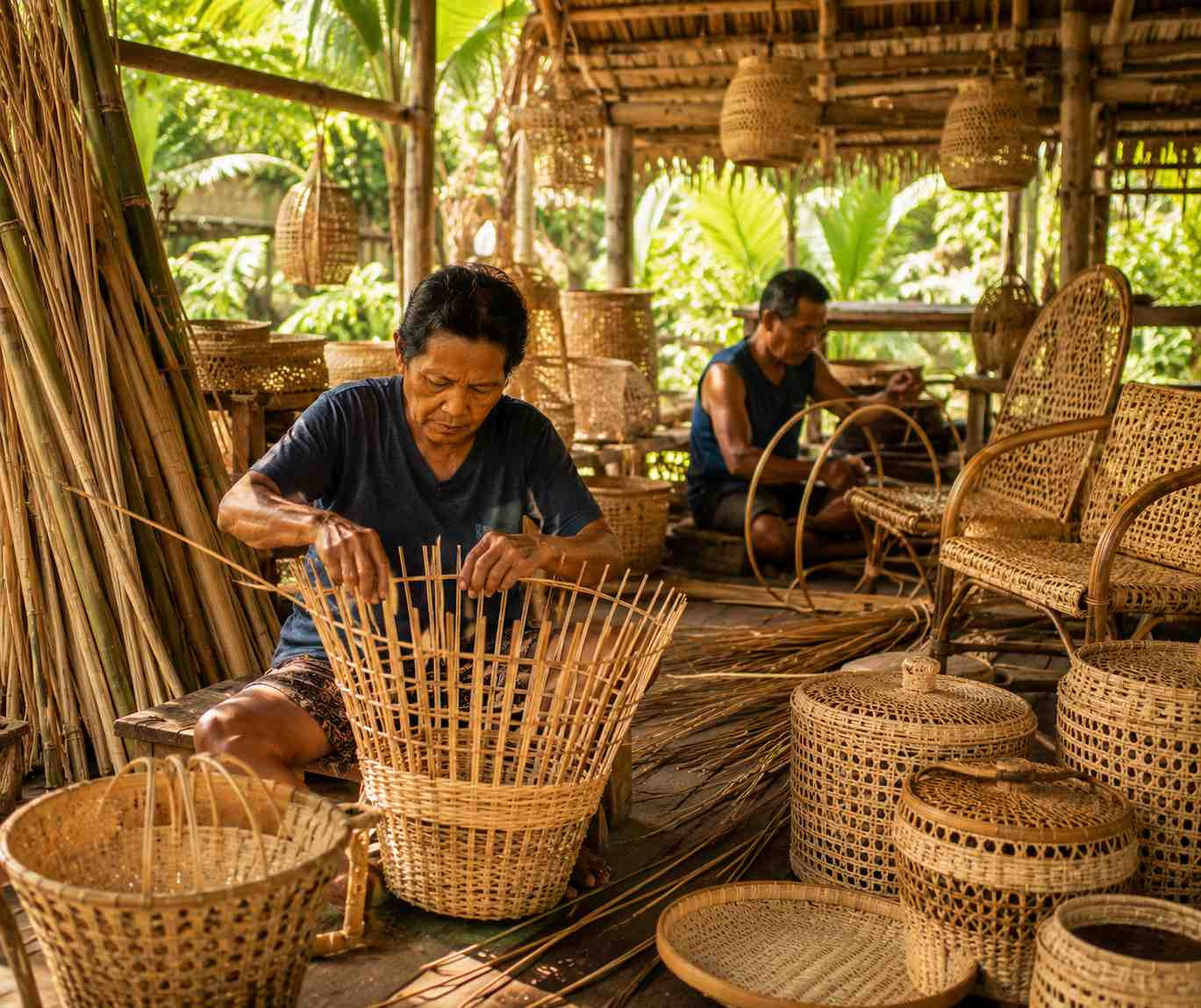
From the tropical forests of the Philippines, long and flexible rattan stems have been transformed by skilled Filipino hands for generations. Harvested, cleaned, dried, split, bent, and woven, this natural material becomes everything from practical baskets and household objects to beautiful furniture, lighting, décor, and contemporary accessories. Yet behind every finished piece is something deeper: generations of knowledge connecting Filipino creativity with the forests and communities that helped shape it.
Rattan craftsmanship reflects the Filipino ability to transform a simple natural resource into something strong, functional, and beautiful. Although designs have evolved with changing lifestyles, the patience, skill, and understanding required to work with rattan continue to make this craft an important part of Philippine cultural heritage.
1. What Makes Rattan Special?
Rattan is a group of climbing palms found naturally in tropical forests, including those of the Philippines.
Artisans value it because it is:
Strong yet lightweight
Highly flexible
Easy to split into weaving strands
Suitable for bending and curved forms
Versatile enough for both structural and decorative work
Unlike bamboo, which is typically hollow and more rigid, rattan generally has solid stems that make it especially suitable for weaving and shaping.
2. From Forest to Everyday Life
For generations, Indigenous and rural Filipino communities have used rattan to create objects needed for everyday life.
Traditional uses include:
Carrying and storage baskets
Agricultural containers
Household objects
Bindings and structural elements
The techniques required to make these objects were learned through observation and practice, then passed from one generation to the next.
3. The Skill Behind Every Strand
Rattan weaving requires much more than simply crossing strands together.
Artisans must understand flexibility, strength, tension, proportion, pattern, and structural balance. Stronger sections can create frames, while thinner strips are carefully interlaced to form woven surfaces.
Even a simple basket may represent years of accumulated knowledge and practice.
4. From Traditional Baskets to Filipino Furniture
Over time, rattan craftsmanship expanded beyond practical household objects.
Today, Filipino artisans transform rattan into:
Chairs, tables, stools, and benches
Lamps and decorative screens
Trays and household accessories
Bags and contemporary lifestyle products
Modern home décor and furniture
Traditional skills continue to influence contemporary Filipino design, allowing the craft to evolve without losing its connection to the past.
5. Rattan and Responsible Sustainability
Rattan is a renewable natural material, but being natural does not automatically make it sustainable.
Responsible harvesting, healthy forests, careful resource management, sustainable sourcing, efficient processing, and support for artisan livelihoods are all important. Protecting rattan craftsmanship therefore also means protecting the landscapes that provide the material.
6. Travelers Can Help Preserve the Craft
Visitors can support Filipino artisans by buying directly from craftspeople when possible, choosing genuinely handmade products, asking where items were produced, appreciating fair pricing, and looking for responsibly sourced materials.
A handmade rattan piece can become much more than a souvenir—it can carry the story of an artisan, a community, and the Philippine landscape.
Woven From the Philippine Forest
Every strand of rattan represents a connection: to the forest where it grew, the artisan who shaped it, and the generations that preserved the knowledge behind the craft.
From humble baskets to contemporary furniture, Philippine rattan craftsmanship tells an enduring story of creativity, resourcefulness, tradition, and respect for nature.
Preserving that story means supporting artisans, protecting natural resources, and ensuring younger generations have the opportunity to keep weaving Filipino heritage into the future.
Bloom Philippines: An Adult Coloring Book
Celebrates the extraordinary beauty of the Philippine islands through more than 50 detailed illustrations inspired by tropical flowers, native plants, and Filipino-inspired decorative patterns. Featuring Sampaguita blossoms, Gumamela flowers, exotic orchids, palm frond mandalas, rainforest botanicals, and tropical island-inspired designs, this collection offers a relaxing and creative escape into one of the world’s richest biodiversity hotspots. Designed for mindfulness, stress relief, and artistic expression, Bloom Philippines is perfect for nature lovers, coloring enthusiasts, and anyone seeking a deeper appreciation of the Philippines’ natural and cultural beauty.


Made In makes the cookware the world's best kitchens actually cook on. Our stainless, carbon steel, and forged knives are trusted in Michelin-starred restaurants and loved by millions of home cooks, built by master craftspeople using techniques honed over generations. No gimmicks. Just professional-grade tools that perform and last a lifetime.
Right now, that same cookware is at its lowest prices of the year. The End of Season Sale is live with up to 40% off, from the pans you reach for every night to full sets that outfit a kitchen in one move. It's the best time all season to trade up.
The cookware chefs choose, at the price home cooks have been waiting for.
Reply