- Finding Utopia Newsletter
- Posts
- Traditional Arts and Crafts of the Philippines — Handmade Treasures That Tell a Nation’s Story
Traditional Arts and Crafts of the Philippines — Handmade Treasures That Tell a Nation’s Story
Stories: Traditional Arts and Crafts of the Philippines — Handmade Treasures That Tell a Nation’s Story; Why Filipinos Say “Ate” and “Kuya” — Small Words That Make Everyone Feel Like Family

KGM Resorts
July 17, 2026

In partnership with

Hello and Mabuhay!
Welcome to Finding Utopia — your trusted guide to exploring the wonders of the Philippines and beyond.
In this edition, we bring you inspiring stories and essential travel insights to fuel your next adventure:
Traditional Arts and Crafts of the Philippines — Handmade Treasures That Tell a Nation’s Story
Why Filipinos Say “Ate” and “Kuya” — Small Words That Make Everyone Feel Like Family
Wherever you're dreaming of going next, we're here to guide you closer to your utopia.
Enjoy the read!
— The Finding Utopia Team
Traditional Arts and Crafts of the Philippines — Handmade Treasures That Tell a Nation’s Story

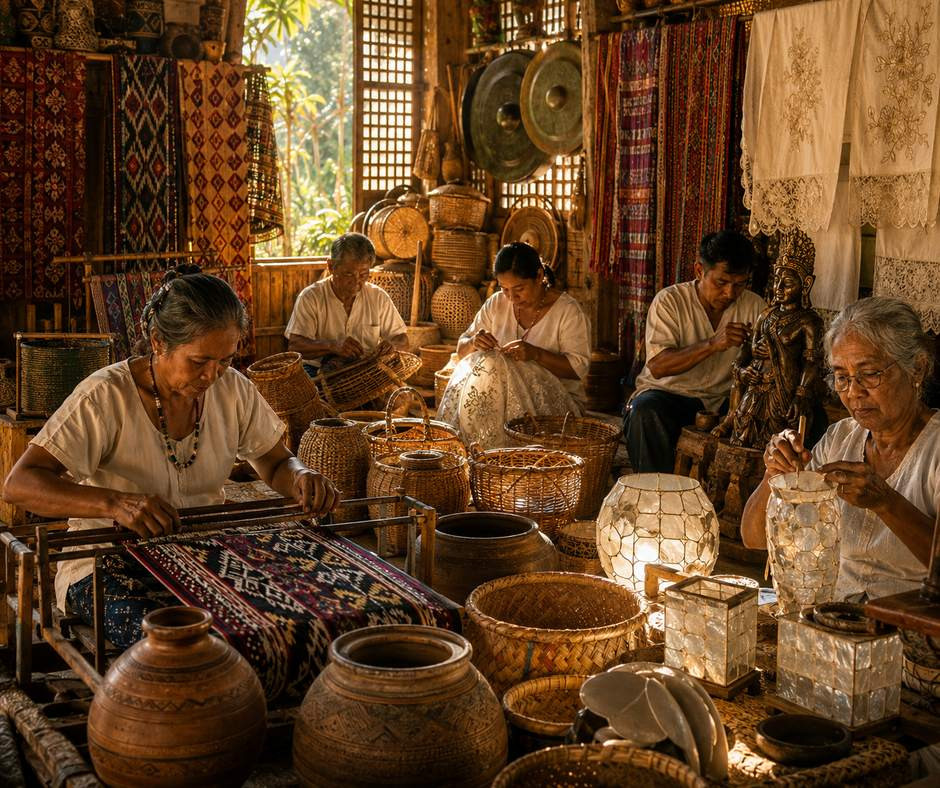
Across the Philippines, every woven textile, carved sculpture, hand-shaped pottery piece, and intricate basket tells a story. Long before modern factories and mass production, Filipino artisans transformed natural materials into objects that were both practical and beautiful. These traditional arts and crafts continue to reflect the creativity, resilience, and cultural identity of the Filipino people, preserving techniques that have been passed down through countless generations.
More than handmade products, these crafts are living expressions of history and heritage. They reveal how Indigenous communities, local artisans, and regional traditions have shaped the country's artistic identity for centuries. From the mountains of Luzon to the islands of the Visayas and Mindanao, every region contributes its own unique craftsmanship, making the Philippines one of Southeast Asia's richest centers of traditional art. Here are some of the reasons why Filipino arts and crafts continue to inspire both travelers and collectors around the world.
1. A Heritage Rooted in Nature
Filipino craftsmanship begins with the natural world.
Artisans traditionally use bamboo, rattan, abaca, clay, wood, and capiz shells.
Natural materials are transformed into beautiful and functional creations.
Many techniques have remained unchanged for generations.
Nature has always provided both the inspiration and the resources for Filipino artisans.
2. Every Region Has Its Own Artistic Identity
The country's diversity is reflected in its crafts.
Northern Luzon is known for handwoven textiles such as Abel Iloko.
Mindanao is celebrated for the T'boli people's sacred T'nalak weaving.
Different provinces preserve their own pottery, basketry, woodcarving, and metalwork traditions.
Each craft tells the story of the community where it was created.
3. Craftsmanship Passed Down Through Generations
Traditional skills are preserved through families and communities.
Master artisans teach younger generations by hand.
Techniques are refined through years of practice.
Every handmade piece reflects patience, skill, and cultural knowledge.
These traditions help preserve the Philippines' rich cultural heritage.
4. Art That Serves Everyday Life
Many Filipino crafts combine beauty with function.
Woven baskets, pottery, furniture, and household items remain practical today.
Decorative pieces often carry cultural and symbolic meaning.
Art becomes part of everyday Filipino life rather than existing only in museums.
This blend of artistry and usefulness has long defined Filipino craftsmanship.
5. Supporting Local Artisans and Communities
Traditional crafts continue to provide livelihoods across the country.
Small workshops preserve regional techniques.
Handmade products support local economies.
Purchasing authentic crafts helps sustain cultural traditions.
Every handcrafted piece represents the dedication of the artisan behind it.
6. Preserving a Living Cultural Legacy
Traditional arts remain relevant in the modern world.
Cultural festivals and heritage markets celebrate local craftsmanship.
Museums and cultural centers help educate future generations.
Contemporary artisans continue to blend tradition with innovation.
These efforts ensure that Filipino craftsmanship continues to thrive while honoring its roots.
More Than Handmade — The Creative Soul of the Philippines
The traditional arts and crafts of the Philippines are far more than beautiful souvenirs. They are living expressions of history, identity, and community, reflecting the creativity of generations of Filipino artisans who transformed local materials into works of lasting beauty.
Whether it's a handwoven textile, a carved wooden sculpture, a clay pot, or a finely crafted basket, every piece carries a story of culture, resilience, and pride. By supporting these traditions and the people who keep them alive, travelers help preserve one of the Philippines' greatest cultural treasures for generations to come.
Why Filipinos Say “Ate” and “Kuya” — Small Words That Make Everyone Feel Like Family

One of the first things many visitors notice in the Philippines is that people often call each other “Ate” or “Kuya,” even when they are not related. At first, it may seem unusual to hear a cashier, waiter, neighbor, or even a stranger addressed as an older sister or older brother. But in Filipino culture, these simple words carry far more than their literal meaning. They are expressions of respect, warmth, and human connection that help make everyday interactions feel more personal.
In a society where relationships are deeply valued, Ate and Kuya help bridge the gap between strangers and family. Rather than creating distance, these honorifics foster familiarity, kindness, and mutual respect. They reflect a cultural belief that every person deserves to be treated with dignity and consideration. Whether spoken in a family home, a local market, or a busy city street, these words reveal something important about the Filipino way of seeing others. Here are some of the reasons why Ate and Kuya remain such meaningful expressions in everyday Filipino life.
1. They Are Expressions of Respect
At their core, Ate and Kuya are respectful forms of address.
Ate means older sister.
Kuya means older brother.
They acknowledge another person's seniority in a warm and respectful way.
Using these words reflects the Filipino value of showing courtesy in everyday conversations.
2. They Go Beyond Family Relationships
In the Philippines, these titles are not limited to relatives.
Shopkeepers, drivers, servers, and coworkers may be addressed as Ate or Kuya.
They help create friendly and respectful interactions.
Even strangers are often addressed this way.
The words help transform ordinary encounters into more welcoming experiences.
3. They Reflect the Value of Kapwa
The tradition is closely connected to the Filipino concept of Kapwa, or shared identity.
Encourages people to treat others like members of an extended family.
Promotes empathy and mutual respect.
Strengthens a sense of community and belonging.
These simple titles remind people that relationships matter.
4. They Help Build Community
Ate and Kuya make conversations feel more personal.
They create a friendly atmosphere.
They reduce social distance between people.
They encourage kindness in everyday interactions.
Small words like these help strengthen the close-knit communities for which the Philippines is known.
5. A Tradition Passed Down Through Generations
Filipinos learn these expressions from an early age.
Children are taught to use them respectfully.
Parents and grandparents pass the tradition to younger generations.
The custom continues both in the Philippines and among Filipino communities abroad.
Their continued use reflects the enduring importance of respect in Filipino culture.
6. A Small Word With a Big Meaning
To visitors, Ate and Kuya may seem like simple titles.
They express warmth without being overly formal.
They acknowledge another person's value.
They make people feel welcomed and appreciated.
These everyday expressions help explain why Filipino hospitality is remembered by so many travelers.
More Than Titles — A Reflection of the Filipino Heart
Ate and Kuya are much more than words used to address older people. They reflect a culture that values respect, kindness, and meaningful human connection. In the Philippines, these simple expressions remind us that relationships are built through everyday acts of courtesy and that even strangers can be treated like family.
For anyone visiting the Philippines, understanding the meaning behind Ate and Kuya offers a deeper appreciation of Filipino culture. They are small words with a lasting impact—proof that sometimes the simplest expressions say the most about a nation's values and the warmth of its people.

Bloom Philippines: An Adult Coloring Book
Celebrates the extraordinary beauty of the Philippine islands through more than 50 detailed illustrations inspired by tropical flowers, native plants, and Filipino-inspired decorative patterns. Featuring Sampaguita blossoms, Gumamela flowers, exotic orchids, palm frond mandalas, rainforest botanicals, and tropical island-inspired designs, this collection offers a relaxing and creative escape into one of the world’s richest biodiversity hotspots. Designed for mindfulness, stress relief, and artistic expression, Bloom Philippines is perfect for nature lovers, coloring enthusiasts, and anyone seeking a deeper appreciation of the Philippines’ natural and cultural beauty.


1000s Of People Are Building Their Own App With Ai. Are You?

Every tool you're paying for right now was built by someone who's never done your job. They guessed at what you needed, wrapped it in a subscription, and now you're locked in - paying monthly for software that's 80% of what you actually want.
That other 20%? It's costing you time, workarounds, and money every single week.
Justin Burns figured out how to close that gap. He builds the exact tool he needs using AI - no code, no developers, no waiting. And this July 22-24, he's showing you how to do the same thing, live, in three days.
The event is free. The app you walk away with is yours.
Grab your seat for the Apps Built With AI Summit and stop paying for software that almost works.
Register free here — replays available for all who sign up.
Reply