- Finding Utopia Newsletter
- Posts
- What Is Mano Po? — The Filipino Tradition of Respect Passed Through Generations
What Is Mano Po? — The Filipino Tradition of Respect Passed Through Generations
Stories: What Is Mano Po? — The Filipino Tradition of Respect Passed Through Generations; The Cebu Flowerpecker — The Tiny Philippine Bird Once Thought Extinct

KGM Resorts
August 07, 2026

Sponsored by

Hello and Mabuhay!
Welcome to Finding Utopia — your trusted guide to exploring the wonders of the Philippines and beyond.
In this edition, we bring you inspiring stories and essential travel insights to fuel your next adventure:
What Is Mano Po? — The Filipino Tradition of Respect Passed Through Generations
The Cebu Flowerpecker — The Tiny Philippine Bird Once Thought Extinct
Wherever you're dreaming of going next, we're here to guide you closer to your utopia.
Enjoy the read!
— The Finding Utopia Team
What Is Mano Po? — The Filipino Tradition of Respect Passed Through Generations
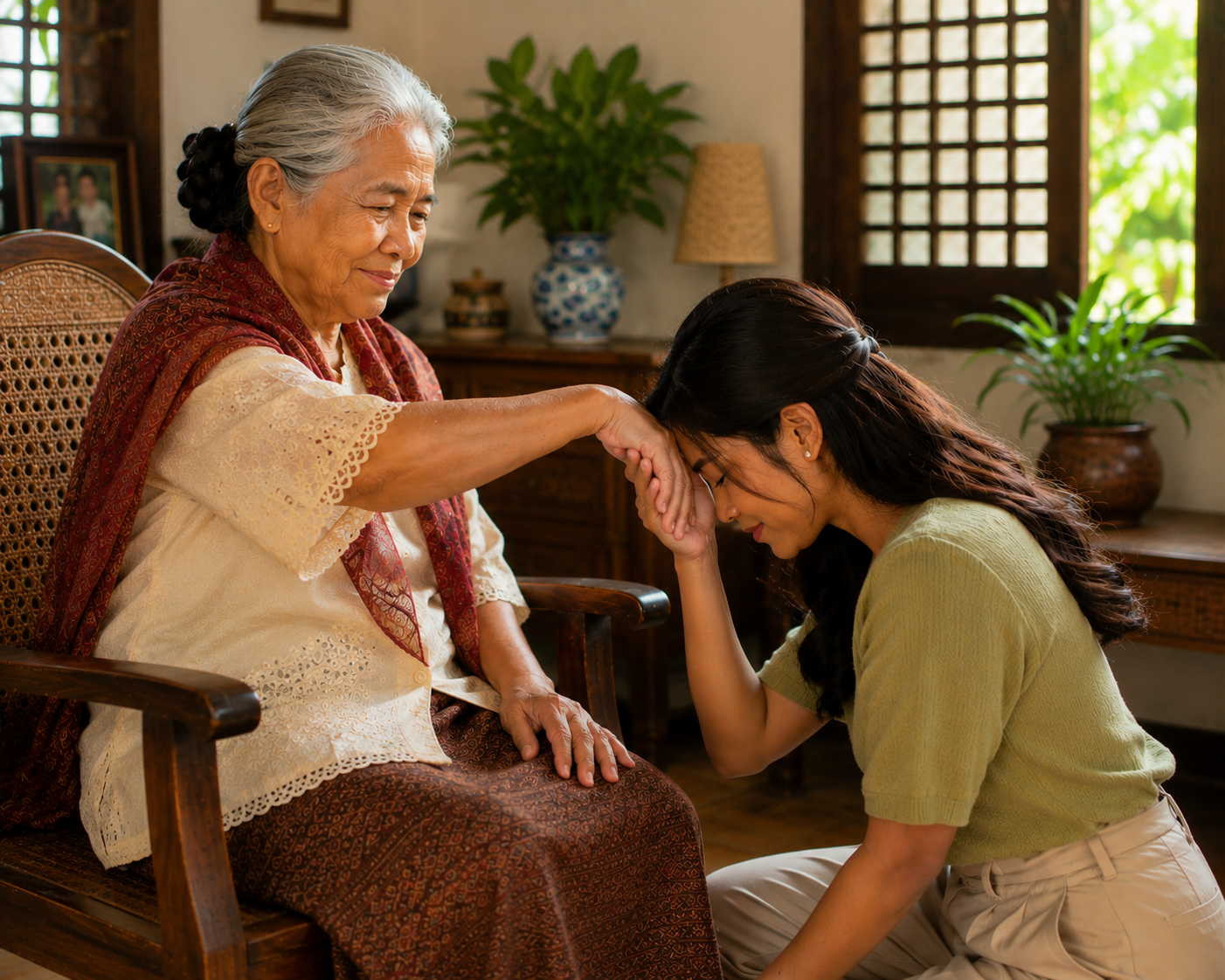
In Filipino culture, some of the most meaningful expressions of love and respect require very few words. Mano Po is one of them. A younger person gently takes the hand of an elder and brings the back of it toward their forehead—a simple gesture that symbolizes respect and the desire to receive a blessing. Commonly practiced when greeting grandparents, parents, older relatives, and other respected elders, Mano Po has been passed from one Filipino generation to another and remains a beautiful expression of family, humility, and cultural identity.
More than an old custom, Mano Po reveals how deeply Filipinos value their elders. It acknowledges their wisdom, sacrifices, experience, and important place within the family. Even as Filipino society changes and families spread across the world, the tradition continues to connect younger generations with the values of those who came before them.
1. What Does Mano Po Mean?
The words themselves help explain the tradition.
Mano comes from the Spanish word for “hand”
Po is an honorific used to express respect
The gesture is performed as a respectful greeting or request for an elder’s blessing
Together, the words and action communicate humility and reverence toward older generations.
2. A Tradition Centered on Respect
Respect for elders is deeply rooted in Filipino family life.
Children are taught to honor parents and grandparents
Older relatives are valued for their experience and wisdom
Mano Po provides a physical expression of that respect
Rather than simply saying that elders are important, the tradition allows younger Filipinos to demonstrate it through action.
3. When Is Mano Po Practiced?
Mano Po can be seen during many family occasions.
Visiting grandparents or older relatives
Family reunions and celebrations
Christmas, New Year, and fiestas
Weddings, baptisms, and other important gatherings
It may also happen during an ordinary visit, making respect part of everyday family life.
4. A Blessing Passed Between Generations
The gesture is not only about the younger person showing respect.
Elders often respond with a blessing, affectionate words, or a gentle acknowledgment. This exchange creates a meaningful connection between generations, symbolizing both respect for the past and hope for those who will carry the family forward.
5. Keeping Filipino Heritage Alive
Mano Po continues to be practiced by Filipino families both in the Philippines and abroad.
Parents teach the gesture to their children
Grandparents help preserve its meaning
Filipino families overseas use it to maintain cultural connections
For younger generations growing up far from the Philippines, traditions like Mano Po can become an important link to their Filipino identity.
6. A Small Gesture with a Powerful Meaning
Mano Po lasts only a few seconds, yet it communicates values that can last a lifetime.
Respect
Gratitude
Humility
Family connection
Cultural continuity
Its simplicity may be exactly why the tradition has endured for generations.
More Than a Gesture — Respect in the Palm of a Hand
Mano Po is more than a traditional Filipino greeting. It is a quiet reminder that respect is something we practice, not merely something we say. Through one small gesture, younger Filipinos acknowledge the wisdom and sacrifices of those who came before them while receiving a blessing to carry forward.
In a rapidly changing world, Mano Po continues to connect Filipino families across generations and even across oceans. As long as a younger hand continues to reach respectfully for an elder’s, this beautiful tradition will remain part of the Filipino story—a blessing passed from one generation to the next.
Read the full blog post: What Is Mano Po? The Filipino Tradition of Respect and Blessing on KGM Resorts
The Cebu Flowerpecker — The Tiny Philippine Bird Once Thought Extinct

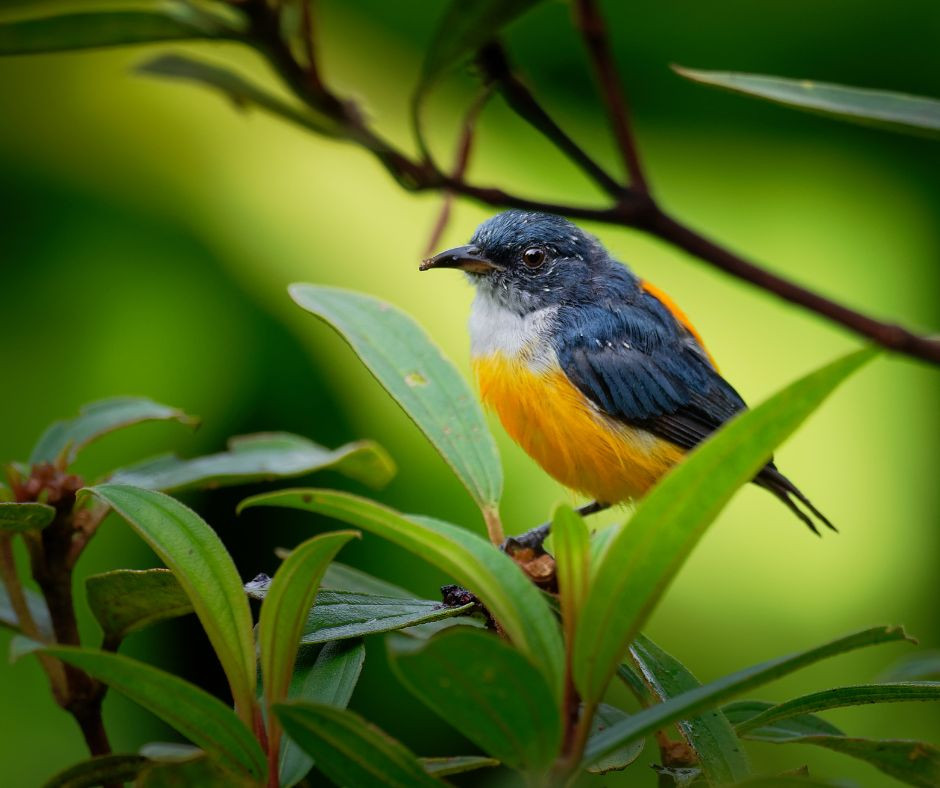
Hidden within the remaining forests of Cebu lives one of the world's rarest birds—the Cebu Flowerpecker (Dicaeum quadricolor). Measuring only about 10 centimeters long, this tiny songbird is found naturally nowhere else on Earth. For much of the 20th century, scientists feared it had disappeared forever after extensive deforestation destroyed most of Cebu's native forests. Then, in 1992, researchers made an extraordinary discovery: a small population had survived. Today, the Cebu Flowerpecker remains Critically Endangered, but its remarkable story has become a powerful symbol of resilience, conservation, and hope.
The bird's survival depends entirely on Cebu's remaining forest fragments. Beyond protecting one rare species, conserving these habitats also safeguards other native plants and animals that share the same ecosystem. Here are some of the reasons the Cebu Flowerpecker is one of the Philippines' most remarkable wildlife treasures.
1. A Bird Found Nowhere Else on Earth
The Cebu Flowerpecker is truly unique.
It is endemic exclusively to Cebu Island
Its entire global population exists within a very limited area
It survives in small fragments of remaining native forest
This extremely restricted range makes protecting Cebu's forests essential to the species' future.
2. Tiny Bird, Important Job
Despite measuring only around four inches long, the Cebu Flowerpecker plays an important ecological role.
Feeds on small fruits and berries
Drinks nectar from flowering plants
Eats tiny insects and other invertebrates
Helps disperse seeds throughout the forest
Its feeding habits can help native trees and plants regenerate, demonstrating how even the smallest animals contribute to healthy ecosystems.
3. Once Believed Extinct
For decades, the Cebu Flowerpecker appeared to have vanished.
Extensive logging, agricultural expansion, urban development, and forest loss destroyed much of its natural habitat. With no confirmed sightings for nearly a century, scientists feared the species had become extinct.
Then came an extraordinary discovery.
4. Rediscovered in 1992
Researchers found a surviving population in 1992, transforming the Cebu Flowerpecker from a “lost” species into one of Philippine conservation's most hopeful stories.
The rediscovery proved that wildlife can sometimes survive in small pockets of remaining habitat—and that protecting those fragments can make an enormous difference.
5. Still Critically Endangered
Rediscovery did not mean the bird was safe.
Habitat loss remains its greatest threat
Forest fragmentation isolates surviving populations
Its small population makes it especially vulnerable
Climate change and continued human pressures threaten its habitat
Its future depends heavily on protecting and restoring Cebu's remaining native forests.
6. Conservation Offers Hope
Efforts now focus on habitat protection, forest restoration, and community involvement. The Central Cebu Protected Landscape provides an important refuge, while restoration projects aim to improve degraded forests and reconnect fragmented habitats.
Protecting the Cebu Flowerpecker ultimately means protecting an entire ecosystem.
A Tiny Bird with a Big Story
The Cebu Flowerpecker may be one of the smallest birds in the Philippines, but its story carries an enormous message.
Once feared lost forever, its rediscovery reminds us that nature can be remarkably resilient when even small areas of habitat survive. Yet its Critically Endangered status also reminds us how quickly unique species can disappear.
By protecting Cebu's remaining forests, the Philippines isn't simply saving one tiny bird—it is preserving an irreplaceable piece of the country's extraordinary natural heritage for future generations.
Wild Philippines: An Adult Coloring Book
Discover the rare and extraordinary endemic animals of the Philippines through this beautifully detailed adult coloring book inspired by the country’s unique biodiversity. From the majestic Philippine Eagle and the tiny Philippine Tarsier to rare forest mammals, vibrant birds, and fascinating marine species found nowhere else on Earth, every page celebrates the remarkable wildlife of the Philippine archipelago. Featuring intricate tribal-inspired patterns, tropical elements, and nature-themed designs, this coloring book invites you to explore, unwind, and connect with the wild beauty of the Philippines.


I'm 63 With $1.5M. Can I Spend $10K a Month?

You’ve saved $1.5 million. Now comes the real test.
Can it produce $10,000 a month, or will that pace drain your portfolio?
Most retirees do not get a clear answer until it is too late.
The issue is not just how much you have. It is whether your portfolio was built to pay you, not just grow.
That difference can determine whether your money lasts decades or starts breaking down early.
Sequence of returns, taxes on withdrawals, healthcare costs, and whether the 4% rule still applies all play a role.
Fiduciary advisors created a breakdown showing what drives sustainable income and why the same $1.5M can produce very different outcomes.
If you have $1M or more invested, do not guess.
Reply